


By Patricia Schallert –
Nestled in the hills of Ojai, the Casitas Dam has been a vital part of Ventura County’s water infrastructure since its completion in 1959. Designed to create Lake Casitas, the dam plays a crucial role in supplying water for agriculture and residential use, managing flood control, and offering recreation for the community.
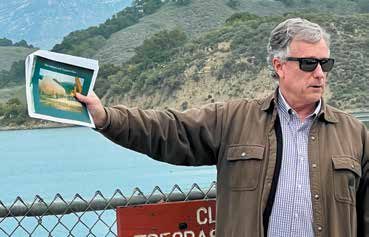
On April 10, Mike Flood, General Manager of the Casitas Municipal Water District, gave the Ventura Rotary Club an informative tour and presentation about the dam and its integration with the Marion Walker Water Treatment Plant (WTP). Water drawn from Lake Casitas is treated at the WTP and delivered to users across the region.
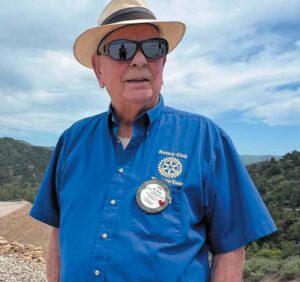
Image by Patricia Schallert
Flood emphasized how this system ensures safe, reliable water while meeting growing demand.
Flood also provided historical context, detailing the water shortages of the 1940s that led to the construction of the Matilija Dam in 1949 and, ultimately, the Casitas Dam a decade later.
Sediment buildup and environmental concerns have since raised questions about the Matilija Dam’s future, reinforcing the importance of long-term water management planning.
Key figures like Fred Seaton, U.S. Secretary of the Interior under President Eisenhower, and Charles Teague, the first general manager of the Ventura River Municipal Water District (VRMWD), were instrumental in securing federal funding and establishing the district. Their efforts laid the foundation for modern water infrastructure in the area.
Flood noted that growing public awareness led to coordinated water management strategies—including rainfall capture, groundwater recharge, and infrastructure upgrades—ensuring a more resilient supply system. Major improvements to the dam in 2000 included seismic upgrades, new sluice gates, and advanced monitoring equipment.
Lake Casitas has endured multiple droughts, most notably between 1987–1992 and again from 2012–2016. Strategic conservation and improved weather patterns have since helped refill the lake, which currently stands at 98% capacity. Snowmelt and rainfall have replenished the watershed, aided by local conservation efforts and efficient management.
Flood also discussed regional interconnection projects designed to improve water reliability by linking supply systems between agencies. These connections enhance emergency response capabilities and allow for more flexible water distribution—especially during times of drought.
The story of Casitas Dam and the WTP underscores the importance of proactive planning and regional collaboration in adapting to climate challenges. With ongoing infrastructure investments and community involvement, Ventura County is well-positioned to navigate future water demands.
For more information, visit www.casitaswater.org/yourwater.
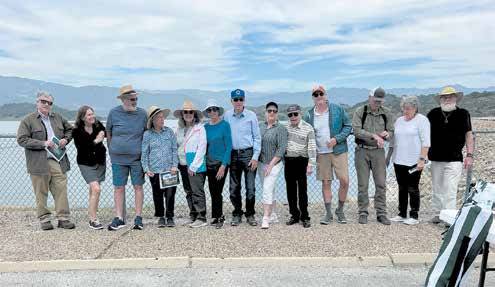
Image by Patricia Schallert.
