


By Nella Nelson –
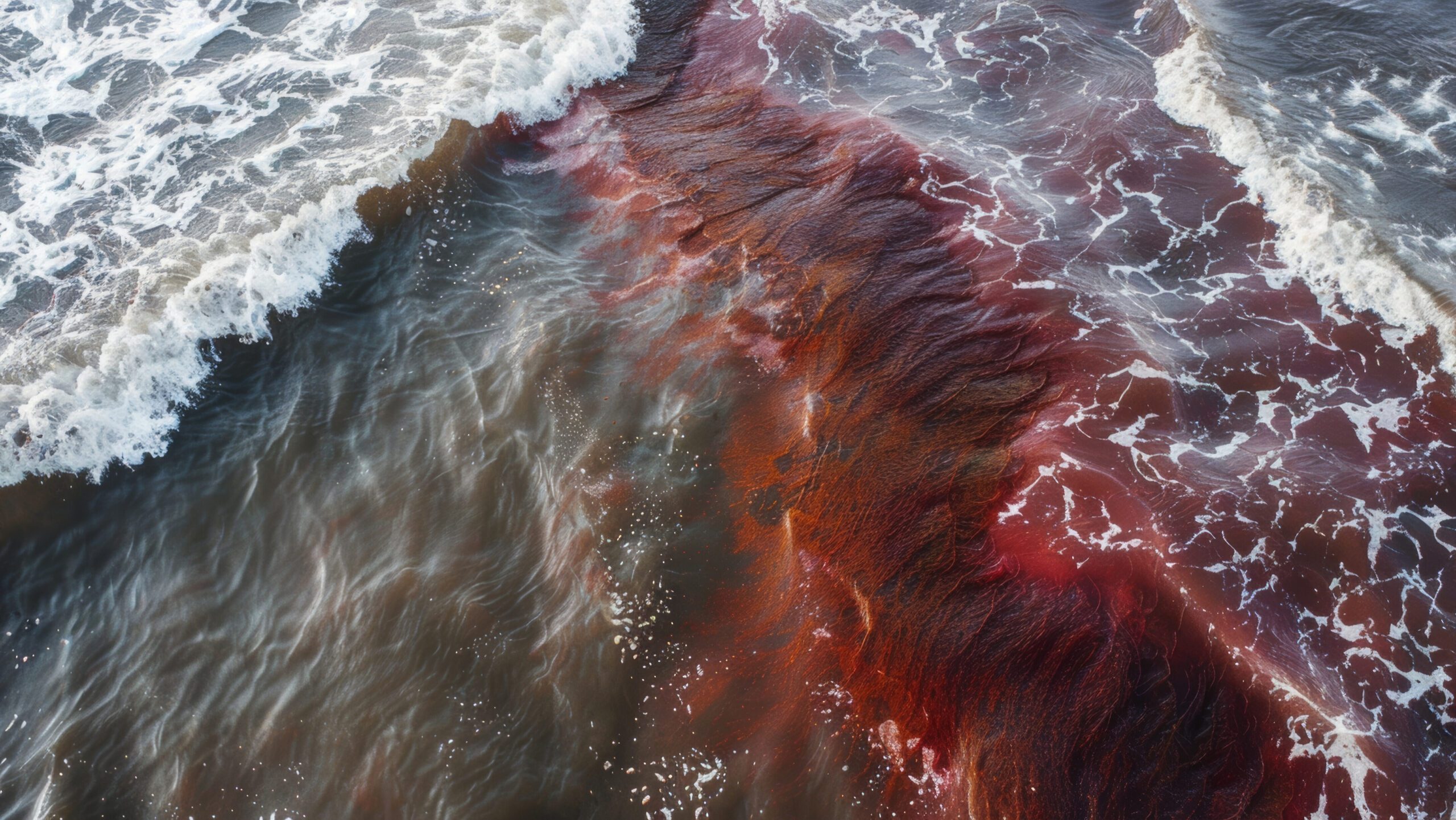
Like the Nile River turning to blood, it’s an almost Biblical scene on the California coast and in our local harbors. Hues of red, brown, dark green, or rusty orange can vary and ooze into the currents like a spreading dye. What exactly is a red tide and is it dangerous? It’s a good question to consider since Ventura has been has seen one of the largest and reddest of red tides in the past few weeks.
First, red tide is a natural phenomenon that plagues every ocean of the world. Here in California, it occurs between early spring to late summer. It then comes to fruition when phytoplankton (a natural part of the ocean’s ecosystem) begin to “bloom”. These microscopic single-celled plants contain a red pigment called peridinin. When these rapidly produce in high concentrations, they discolor the water and cause visual blooms. Preferring warmer and calmer waters, they grow quickly, lasting anywhere from a few days to a few months.
Red tide actually changes the seawater’s chemical composition. Low levels of algae are harmless, but it can become dangerous to humans and fatal for sea creatures. “The neurotoxins produced by harmful algae blooms can cause massive fish kills,” an article in National Geographic stated. “The toxin works its way through the food web, with other species preying on the sick fish. Die-offs of many marine species, like whales and sea turtles, have been linked to red tides. The toxins can even produce a foam that causes sea birds to lose the waterproofing on their feathers, resulting in their death.”
Humans can experience eye, mouth and throat irritation as well as flu-like symptoms upon exposure to red tide. A safe recommendation would be to avoid beaches where red tides have been reported. The California Department of Public Health emphasizes that most red tides are harmless, but it’s important to be vigilant. Shellfish may be toxic as they consume enough toxic organisms even when there is no red tide or after it has dissipated.
Not all red tides are actually red. Atmospheric conditions play a role in the variation of color from red to green. Then, at night, a spectacular effect takes place—the bioluminescence. Red tides of this type have been studied since the 1900’s by the Scripps Institution of Oceanography at UC San Diego. Scientists have been taking water samples since that time and studies show that red tide events are increasing.
Locally, more events have occurred in recent months due to debris and runoff from Pacific Palisades wildfires. According to a CBS news report, the waters tested off Santa Monica revealed “a lot of heavy metals”. As the ocean laps up contaminants into the sea, a rising number of sick animals are washing up on our shores (now up to four times as many). Mostly, animals have eaten fish that have consumed algae containing a toxin called domoic acid. This neurological toxin affects their brains and causes disorientation and seizures. Algae with domoic acid is sometimes called red tide. Wind storms can also stir up sediment in the ocean which cause the condition.
For more information on red tides, their different types or how toxic they may be, call the Biotoxin Information Hotline at 800-553-4133 or visit the California Department of Public Health online at cdph.gov.
Sources:
https://2seewhales.com/blog/what-is-californian-red-tide/
https://www.cbsnews.com/news/red-tide-southern-california-wildfires/
https://www.nationalgeographic.com/environment/article/red-tides
https://scripps.ucsd.edu/news/everything-you-wanted-know-about-red-tides
