


By Patricia Schallert –
Nestled along the scenic coastline of McGrath State Beach, summers there were once filled with adventure, sunshine, and family fun. Campers woke to the sound of crashing waves and cool ocean breezes, while visitors spent their days swimming, kayaking through calm waterways, surfing Pacific waves, and exploring the nearby estuary. Whether roasting marshmallows at a campsite, watching sunsets over the ocean, or paddling along the shore, McGrath State Beach offered a unique blend of relaxation and outdoor recreation that brought families and beach lovers back year after year.
Unfortunately, McGrath State Beach has faced repeated closures since 2014 due to chronic flooding tied to the nearby Santa Clara River Estuary. According to Katharine Wilson, Chief Planner and Senior Parks & Recreation Specialist, the sandbar at the mouth of the Santa Clara River acts as a natural dam. When waves and ocean currents deposit sand at the river outlet, drainage from the river and estuary is blocked, causing water to back up into low-lying campground areas.
Wilson explained that even small increases in water levels can flood campsites, access roads, restrooms, and park infrastructure. During wet periods, runoff and river flow worsen flooding, while drought conditions can prevent the river from naturally breaking through the sandbar, trapping water for extended periods. Although park staff once manually breached the sandbar, officials must now balance flood management with protection of the environmentally sensitive estuary habitat.
In response to ongoing flooding and sea-level rise concerns, the California Coastal Commission and California State Parks are considering long-term plans to relocate portions of McGrath State Beach to higher ground. Officials say historical discharges of approximately 4.7 million gallons of treated wastewater per day into the estuary contributed to elevated water levels and flooding around the campground.
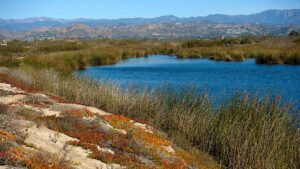
State Parks and environmental partners are studying restoration of between 15 and 35 acres of estuary, lagoon, wetland, and shoreline habitat while potentially relocating portions of the campground farther inland or onto higher ground. Agencies and organizations involved in restoration discussions include the California Department of Parks and Recreation, California State Coastal Conservancy, U.S. Fish and Wildlife Service, California Coastal Commission, California State Parks Foundation, and the Surfrider Foundation.
The restoration effort aims to improve natural water flow through the estuary while expanding habitat for fish, birds, and other wildlife. Some roads and infrastructure may be redesigned or removed to allow water to move more naturally through the area. Officials also hope the project will create expanded opportunities for wildlife viewing, environmental education, and outdoor recreation.
Protecting sensitive riparian and estuary habitat near McGrath State Beach and the Santa Clara River Estuary remains a major priority. Species of concern include the tidewater goby, western snowy plover, and southern California steelhead. Officials say preserving wildlife habitat while maintaining public camping and beach access is central to the project’s long-term goals.
The Los Angeles Regional Water Quality Control Board is also shaping future planning efforts by requiring the City of Ventura to reduce treated wastewater discharges into the estuary. Those reductions are expected to significantly alter estuary conditions, including water levels, sandbar dynamics, habitat patterns, and flooding behavior.
Because the estuary may function more like a natural coastal lagoon following the wastewater reductions, California State Parks is delaying major redevelopment and restoration decisions until scientists better understand the changing environmental conditions. Researchers are conducting groundwater monitoring, flood modeling, habitat mapping, wildlife surveys, and water-quality testing to help guide future planning.
Officials say the updated scientific data will help avoid building infrastructure in vulnerable locations, reduce risks to wildlife habitat, and support a safer, more sustainable approach to campground relocation and wetland restoration. As McGrath State Beach continues to face evolving estuary conditions, flooding, and climate-related challenges, State Parks and partner agencies are taking a cautious approach aimed at balancing public recreation, environmental protection, and long-term coastal resilience.
