


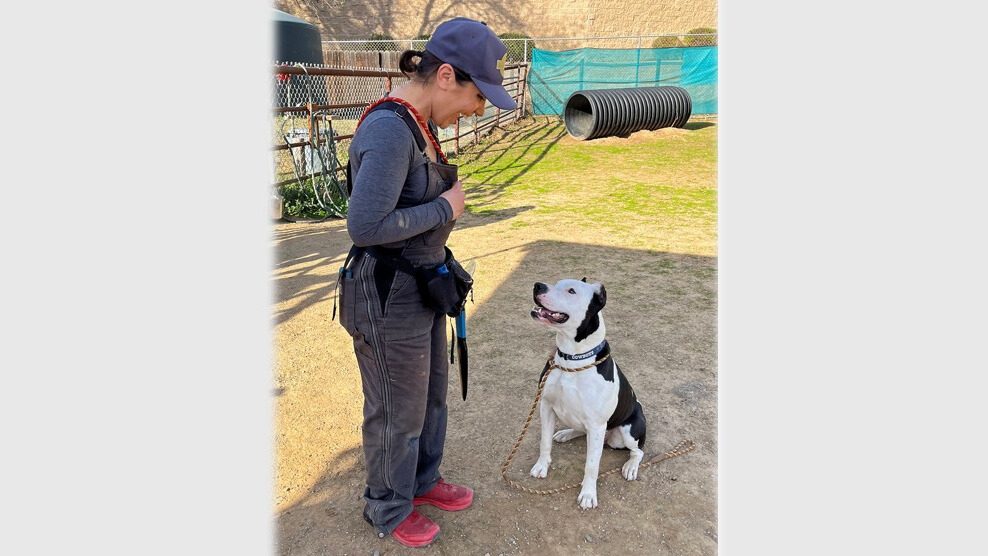
By the Humane Society of Ventura County
In the fast-paced world of animal shelters, understanding the behavior and needs of the dogs in our care is vital to their well-being. Recently, our team had the incredible opportunity to participate in a mentorship program led by Saharai Salazar from Wolf Mother K9. The three-day training focused on improving our staff’s skills in handling, evaluating, and enriching the lives of shelter dogs. This workshop provided invaluable insights into canine behavior, defensive handling techniques, and enrichment strategies that will shape our approach to shelter care moving forward.
Understanding Canine Body Language
A significant portion of the mentorship focused on understanding canine body language, a vital skill for anyone working with dogs, especially in a shelter setting. Interpreting a dog’s physical cues can make all the difference in assessing their emotional state and knowing how to approach them. The workshop helped animal care staff refine their ability to identify signals indicating fear, excitement, aggression, or relaxation. Simple details like the position of a dog’s ears, tail, or posture can provide important clues about their mood and comfort level. This knowledge ensures we approach each dog with respect for their personal boundaries and emotional state.
Defensive Handling Techniques
Handling shelter dogs can be challenging, particularly when dealing with those who are fearful, anxious, or reactive. In these situations, knowing how to handle a dog defensively—while maintaining both the dog’s and handler’s safety—is critical. The mentorship included hands-on practice with defensive handling techniques, teaching staff how to calmly manage high-stress situations without escalating a dog’s anxiety. Whether a dog is fearful of human contact or displaying signs of aggression, these handling methods empower our team to approach situations with confidence and care, keeping both ourselves and the dog safe.
Conducting Welfare-Based Evaluations
One of the core aspects of the mentorship was learning how to conduct welfare-based evaluations for shelter dogs. These evaluations are crucial in understanding a dog’s temperament, needs, and suitability for adoption or foster placement. Through role-playing exercises and real-life examples, we learned how to assess a dog’s behavior while prioritizing their emotional welfare. By using compassionate evaluation methods, we can avoid placing additional stress on the dogs and gain a deeper understanding of their personalities and behavior. This skill helps staff determine the right fit for adoption while ensuring the best possible care for each dog.
Facilitating Dog-to-Dog Introductions
Shelter dogs often benefit from socialization, but dog-to-dog introductions must be handled carefully. The mentorship program provided our team with strategies for facilitating safe and successful meet-and-greets between dogs, minimizing the risk of stress or aggression.
“We learned how to observe both dogs for signs of comfort or discomfort and how to step in and redirect the interaction if needed. These skills are crucial for dogs who may be fearful or reactive around other animals, and knowing how to manage these situations properly can help reduce stress and improve their overall well-being,” said HSVC Behavior and Flow Coordinator Erica Jackson.
Building Trust with Fearful Dogs
Fearful dogs are a common challenge in shelters. Many come from backgrounds where they have experienced trauma or neglect, leaving them unsure of their surroundings and people. During the mentorship, animal care staff learned effective ways to build trust with these dogs, helping them feel safe and secure in the shelter environment. Instead of overwhelming fearful dogs with too much stimulation or pressure, they practiced gentle, patient techniques to help each dog gradually overcome fear and learn to trust again. This understanding is key to creating a compassionate environment for dogs who may need more time to acclimate.
Enrichment for Shelter Dogs
Life in a shelter can be overwhelming for dogs, especially when confined to a kennel for extended periods. Enrichment activities—ranging from interactive toys to mental stimulation games—play a crucial role in easing the stress of shelter life. Throughout the mentorship, staff were introduced to creative enrichment ideas designed to keep dogs engaged and reduce the negative impact of living in a confined environment. These activities not only help alleviate boredom but also provide dogs with the opportunity to practice important skills, such as problem-solving, which benefit their emotional and mental health.
A Game-Changer for Shelter Practices
“This three-day mentorship program has been a game-changer for our team. From refining our understanding of canine body language to learning advanced handling techniques, we’ve gained practical tools that will enhance the care we provide for the dogs in our shelter. We are now better equipped to handle fearful or reactive dogs, run safe and effective playgroups, and create enrichment opportunities that will make life in the shelter less stressful for our animals. We are excited to apply these new skills to our day-to-day work and continue improving our shelter practices,” said HSVC Animal Care Manager Grace Lenthe.
A big thank you to Dee, HSVC’s canine assistant animal care manager, and Saharai from Wolf Mother K9 for organizing this invaluable training and making it possible for our team to gain this expertise. Moving forward, the team will be more confident in providing a safe, supportive, and enriching environment for the dogs in our care. We look forward to seeing how these techniques positively impact their lives!
To learn more, visit hsvc.org/news and wolfmotherk9.org.
