


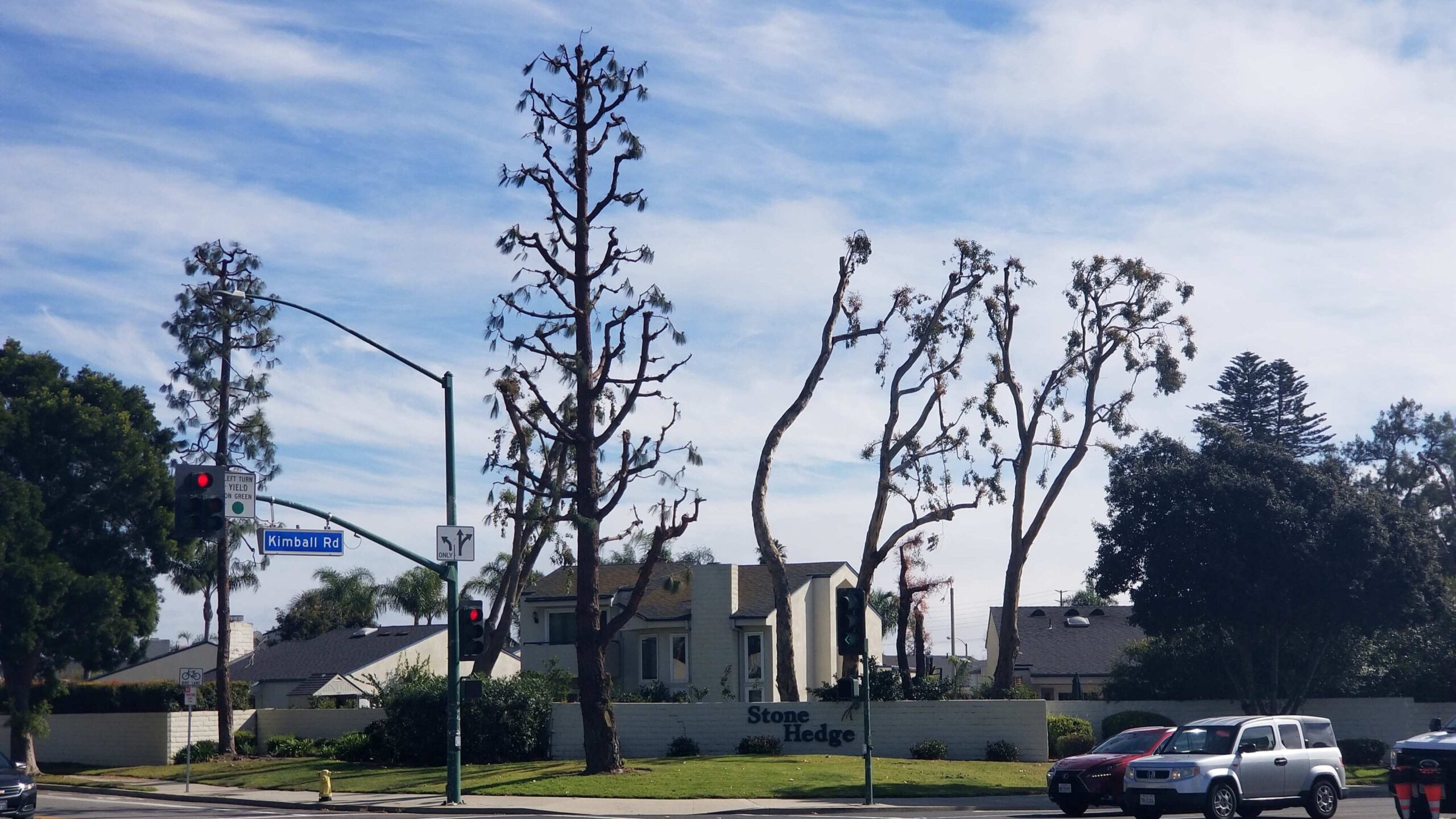
by David Wappler
Nesting bird season is here! Trim trees, shrubs and groundcover primarily in the fall and winter to protect bird nests and bird habitat.
Nearly 3 billion birds have vanished from North America’s skies in the past 50 years. Ever-expanding cities and suburbs have played a big role in this loss. But people who live in cities, towns and rural areas can give birds back a little bit of what they’ve lost by trimming trees, bushes, and ground cover in the fall instead of spring, when they are nesting and raising their young.
At least 175 bird species breed in Ventura County, many of which build nests in trees or bushes. Birds that nest in shrubs and trees in cities include a diverse mix from the very small, such as hummingbirds, to the very large such as the great horned owl and other birds of prey. Numerous songbirds also nest at various heights in shrubs and trees and include the yellow warbler, lesser goldfinch, American goldfinch, house finch, lazuli bunting and numerous others, who enrich neighborhoods with their color and song.
Many species breed between March 1 and August 31, but some, including hummingbirds, owls, and hawks, could nest as early as January or February.
“By simply scheduling truly needed vegetation trimming in the fall and early winter, property managers, tree-trimming businesses, city crews, homeowners and others can help protect and create important nesting bird habitat,” said David Wappler, a wildlife biologist and Ventura Audubon Society member.
The Ventura Audubon Society recommends pruning vegetation between September 1 and December 31, and to remove only as much as necessary and no more than 25% of the tree crown, and less for mature trees. Leaving the tree as intact as possible provides more places for birds to nest as well as rest, hide from predators, and forage for insects, flowers and seeds.
The Ventura Audubon Society also urges people hiring tree trimmers and gardeners to make sure they know that destruction of nests during nesting season violates state and federal laws, and to only hire arborists certified by the International Society of Arborists.
If trimming or thinning is required to meet Defensible Space requirements in a Fire Hazard Severity Zone, vegetation should be surveyed for active bird nests prior to work. Any active nests should be avoided, protected by a buffer of vegetation which can be removed once the young birds have departed the nest.
Because not all birds nest in trees, groundcover should be managed carefully as well.
Birds that nest on the ground in southern California cities and suburbs include the dark-eyed junco, song sparrow, California towhee, spotted towhee, orange-crowned warbler and others. Their nests are often in hidden, hard-to-spot locations.
To protect ground-nesting birds, trim ground cover, such as ivy, in the fall or early winter. Trim enough to avoid having to do a later springtime trim. To provide greater nesting habitat, consider not trimming and letting the ground cover grow to offer more nesting and foraging opportunities for ground-nesting birds.
The same prudent (and lower cost) approach applies to the trimming of shrubs and trees. Consider allowing both trees and shrubs to reach their climax height and density to provide enhanced bird nesting and foraging habitat.
“Routine thinning does not necessarily improve the health of a tree or shrub and destroys their natural form and grace,” said Wappler. “Letting them grow also provides more cooling shade and privacy screening for people.”
