


By Nella Nelson –
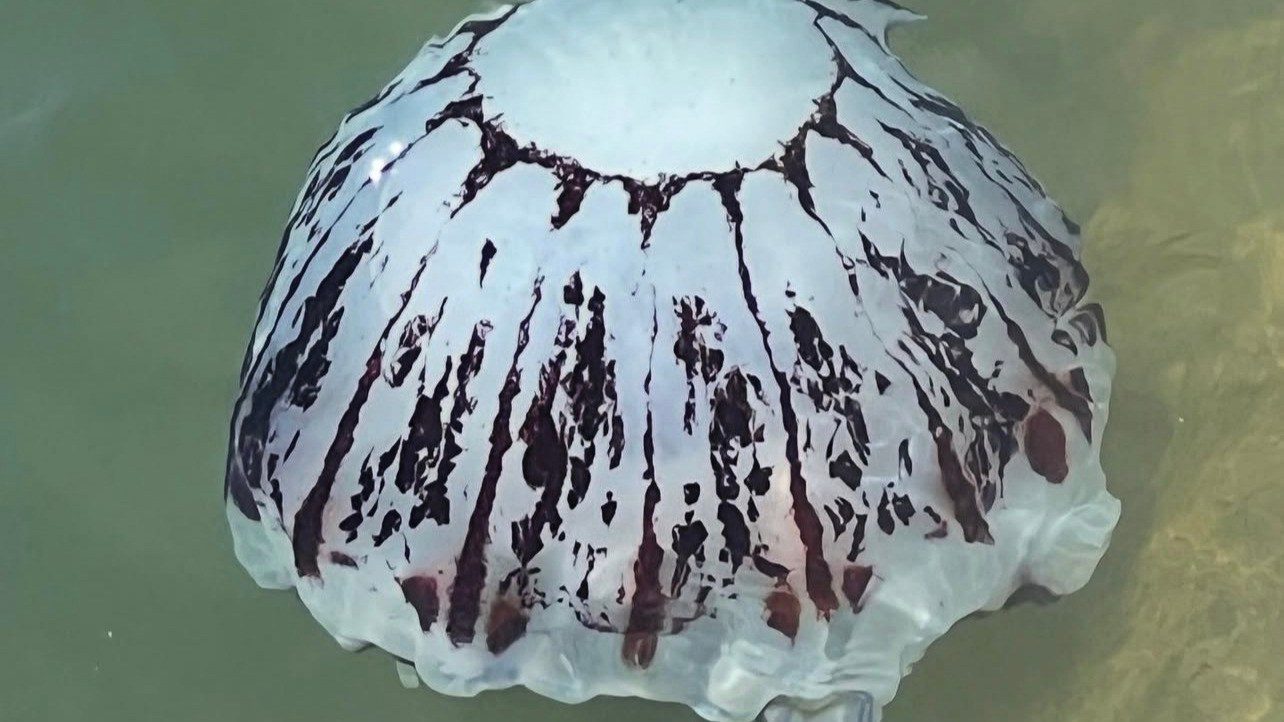
At first, I thought I saw a stray lamp shade floating in the water while working on the docks at my job. Then, I saw it move – gracefully – propelling itself toward the nutrient edge of the marina. Then appearing more like a lamp with a light bulb and a pulsing motor, it maneuvered toward the channel opening. I continued to observe, fascinated, as the creature turned somersaults and revealed its long tangle of tentacles. The first time I spotted a purple striped jellyfish, or sea nettle, I couldn’t believe we had such vibrant exotic sea creatures in Ventura, yet I have seen several since as have many residents who spend time on the water.
Now, you will know what to look for and be able to identify it when you spot a pizza-sized jellyfish with glowing white and purple stripes in our own waters. Keep your distance, though, as they can deliver a painful yet not fatal sting. They do not swarm and wash up on shores as their jellyfish relatives do.
While the invertebrate (also known as Chrysaora colorata) mostly lives in the open ocean, it is drawn to areas of high zooplankton which it feeds on. It eats other jellies, salps, larval fish and fish eggs as well. Its only predators are the leatherback turtle and ocean sunfish. The jellyfish paralyzes its prey, then draws it into its digestive system with a frilly oral arm. Young Cancer crabs are often found inside the gut of the jelly, eating the parasitic amphipods that feed on and damage the jelly.
In the jellyfish’s reproductive cycle, the male releases mucus strands of sperm from the tips of its oral arms that are picked up by the female’s tentacles and oral arms. As the strands break up, the female transfers the sperm to her gastrovascular cavity where fertilization occurs. Fertilized eggs are moved to edges of the female’s oral arms where they are brooded and develop into larvae.
The purple striped jellyfish’s lifespan is less than a year and is spent on the California coast, concentrating at Bodega Bay and Monterey and often in the San Pedro Basin and Santa Barbara. Scuba divers tend to identify them off the Huntington Beach coast and near oil platforms.
