


By Ventura Breeze Staff –
If the City of Ventura chooses to honor one of its own with a new statue, it would be hard to find a more deserving candidate than Candalaria Valenzuela, a Native American of the Chumash First Nation who played a key role in preserving the traditions of her people. She rests at Community Memorial Park in Ventura, her grave recently discovered and marked. While her exact birth date is unknown, it is believed she was born around 1838 in the Sespi district of Ventura County. Candalaria spent much of her early life near the village of Saticoy, just east of Ventura. A Mission convert and Roman Catholic, she shared the faith of many of her people.
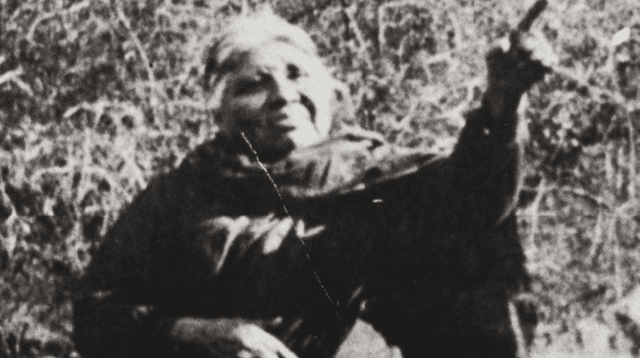
Candalaria is perhaps best known for her contributions to the Smithsonian through ethnographer John Harrington. Much of what we know about Chumash culture comes from his interviews with Candalaria and her son, Jose Juan Olivas. She was described as exceptionally beautiful in her youth, though the only photographs of her show her as an elderly woman. She was highly regarded for her skills as a basket maker and cook.
Candalaria worked for Chumash elder Captain Luis Francisco, who ran a large saloon and restaurant in Saticoy, where the wagons crossed the river. Her cooking skills were so renowned that Raymundo Olivas, the owner of Rancho San Miguel, hired her away from Francisco to work at the Olivas Adobe. It was during her time at the Adobe that Candalaria began a long-term relationship with Raymundo’s son, Jose Dolores Olivas, which resulted in two sons, Jose Juan and Edwardo. Don Raymundo insisted that they be recognized and given the family name. However, when Jose married another woman, Candalaria left the ranch, allowing the Olivas family to raise her sons, ensuring they received a good education—one eventually becoming an automobile mechanic, one of the first in Ventura. Tragically, Jose Dolores’ marriage ended in failure, and the only children he had were those born to Candalaria.
After the family lost its wealth, Candalaria returned to care for the elderly Theodora Olivas and helped raise the children of Rebecca Olivas Della Riva. Years later, the children would recall the old Native American cook who made dolls from scraps of cloth and prepared enormous tortillas—large enough to cover a stove top—for them to snack on. She continued living with the Olivas family until Theodora’s death and the sale of the Adobe.
Candalaria later found work as a cook on a ranch near what is now Lake Casitas, where she suffered severe burns when a faulty gasoline stove exploded; she then moved in with her son in Ventura, who cared for her until her death in 1917 at the age of 81, having witnessed California’s transition from Mexican to U.S. control and Ventura’s transformation from a Mission outpost to a modern city.
Candalaria should be honored with a statue in the place she knew so well, where she now rests; one of her lasting contributions was singing the old songs of her people, recorded on wax Edison cylinders, which have been digitized and can be heard today at the Santa Barbara Museum of Natural History; her voice remains a powerful testament to the Chumash people’s resilience, and she is a fitting figure to represent the enduring spirit and creative drive of Ventura.
