


By Nella Nelson –
They dance on the water. They duck and dive like penguins. They stand up as if on waterskies. Their large fluffy heads and distinct markings make them stand out among other harbor birds. Who are these unique visitors we see in Ventura during the winter months?
They are buffleheads, their scientific name being bucephala albeola (bull-headed in Latin). As birds with a big bull-like head, they’re actually ducks of the golden-eye variety. Ducks can be divided into two categories: the dabbling duck and the diving duck, the second of which the bufflehead belongs. The bufflehead is the smallest diving duck in North America.
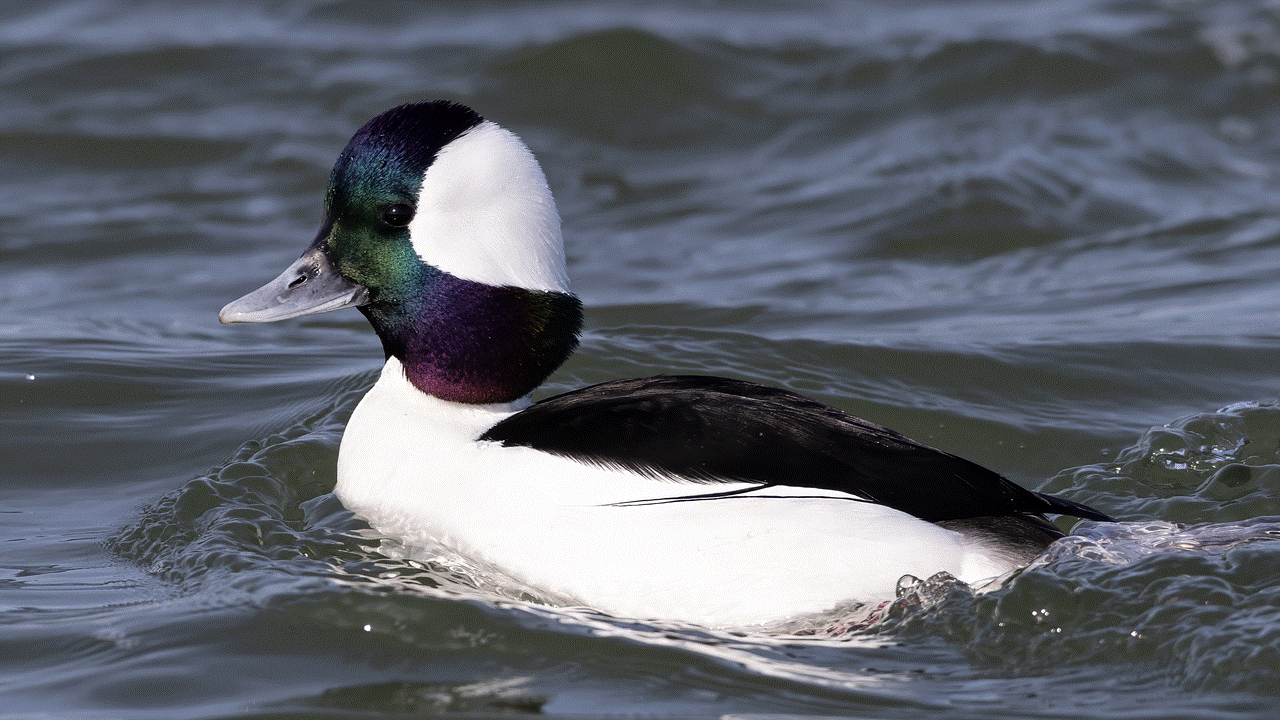
The tiny (13” to 16” long) Bufflehead spends winters bobbing in bays, estuaries, reservoirs, and lakes. Males are striking black-and white from a distance. A closer look at the head shows an iridescent green and purple setting off the striking white patch. Females are a subdued gray-brown with a sharp white patch on the cheek. Bufflehead nest in old woodpecker holes, particularly those made by Northern Flickers, in the forests of northern North America.
Due to their small size, they are highly active, undertaking dives almost continuously while sustained by their high metabolism. They do not tend to collect in large flocks; groups are usually limited to small numbers. One duck serves as a sentry, watching for predators as the others in the group dive in search of food. Buffleheads one of the world’s most punctual migrants, arriving on their wintering grounds within a narrow margin of time.
As aquatic invertebrates, the bufflehead diet shifts seasonally and by habitat from insects and larvae in freshwater during summer to crustaceans, mollusks (clams, snails), and shrimp in saltwater during winter, with some seeds and plant matter occasionally consumed year-round. These energetic diving ducks hunt underwater, swallowing their prey whole. They can spend 12-20 seconds underwater. Predators of the bufflehead tend to be owls, peregrine falcons, bears, minks and bald eagles. Their lifespan in the wild averages three years, though the oldest bufflehead on record was an exceptional 18 years old.
Head-bobbing is the most common courtship display. The male swims toward a female and starts making a movement in which the head is repeatedly extended upwards and forwards. A characteristic sequence of actions during courtship involves fly-over and landing. The male makes a short flight over the female with the head held forward and low. At landing, the male is upright and the crest is erected as he “skis” on water with his feet pointing forward, thereby showing his fancy black and white upper plumage. Buffleheads are the only monogamous ducks, sticking with one life partner throughout their lives. Eggs are laid at an average of 8-10 per clutch, with a smooth creamy color and appearance.
We can see the buffleheads perform their fascinating mating dances and hunting dives in our Ventura Harbor as they prefer calm, sheltered waters and estuary type environments. www.allaboutbirds.org/guide/Bufflehead/overview; www.audubon.org/field-guide/bird/bufflehead
