


By Patricia Schallert –
On March 12th, Ventura’s City Manager, Bill Ayub, presented the Economic Development Future of Ventura at a packed meeting at the Holiday Inn Express, sponsored by the Ventura County Taxpayers Association (VCTA). As a third-generation Ventura resident, Ayub took an unconventional path to his position. He describes Ventura as a “full-service city,” highlighting its diverse offerings, including parks, recreation programs, fire and police departments, and essential water utility systems.
With 37 years in law enforcement, Ayub left the field in 2023. This experience provided him with insights into the challenges facing the Ventura community and motivated him to think of ways to improve the city. He believes that his skills in collaboration and resource management will empower him to make a positive impact.
Ayub began his presentation by discussing Ventura’s workforce, which includes 713 full-time employees and up to 1,200 when combining seasonal and volunteer staff. He discussed the Economic Vitality and Development initiative, which aims to ensure Ventura’s financial health. This includes the repair of the Promenade, improvements to Main Street Moves, enhancements to parking structures, and the establishment of Arts and Culture policies designed to stimulate growth and foster a vibrant community.
In a recent trip to Washington, D.C., Ayub, as part of a delegation from Ventura, addressed the needs of Ventura County, focusing on federal policies that affect affordable housing and future development in Ventura. He stressed the importance of collaboration with state and federal legislators to address funding and staffing issues, fostering optimism for local residents.
Ventura’s economic development emphasizes a “Vibrant Ventura Vision,” which focuses on creating “driving clusters.” These clusters are interconnected businesses and organizations within similar industries that promote innovation and economic activity. They support job creation and are crucial for local economies.
Ayub explained that the general plan serves as a “15-year roadmap for the city,” detailing aspects like building, growth, and environmental concerns. Set to be adopted in 2025, Ayub views this document as “vital for shaping the city’s future.”
The Water Project, as part of the city plan, includes a study of water rates and costs associated with Ventura’s water systems. This analysis aims to identify overhead costs and challenges in operating these systems and purchasing water. Further analysis is planned to ensure efficient management.
Highlighting the city’s strategic priorities that guide the City Council’s actions, Ayub ensures that Ventura has a healthy financial position. He indicated that “enhancing economic vitality is key to growing revenue and improving community services.” The City Council also aims to “implement the economic development strategy adopted last year, which supports local businesses and addresses economic challenges.”
In the past year, Ventura issued 1,504 new business licenses, with 34% requiring development assistance. Of these, 252 are brick-and-mortar establishments like restaurants, salons and retail stores and storefronts. The city also distributes a newsletter to businesses, updating them on local developments and available support.
Ventura County employs a total of 14,611 individuals. The largest employer is the government, followed by the Ventura Unified School District, Amgen, and the U.S. Navy.
Ayub mentioned that while healthcare and social assistance sectors are expanding, Ventura faces challenges such as sustainability and high living costs. Many families struggle to find affordable housing despite ongoing developments. The average rent for a two-bedroom apartment in Ventura ranges from $2,500 to $3,200, depending on various factors such as location, amenities, and the specific apartment-complex factors.
Additionally, the Chamber of Commerce recognizes thriving businesses, which while seemingly a small gesture, carries significant weight. The City Council also celebrates successful businesses during their monthly meetings.
Ventura’s budget includes a steady revenue stream, with a 30% increase for road and street maintenance. However, the city often encounters challenges with labor and material costs. Ayub noted that the unemployment rate is low at 4.9%, but many in the aging workforce are leaving the city.
The operating budget for the city is approximately $149.3 million, with an overall budget of $531 million. Employee costs constitute a significant portion of these expenses. Ayub detailed that budget categories include personnel, capital investments, general expenditures for daily operations, and special funds for specific projects.
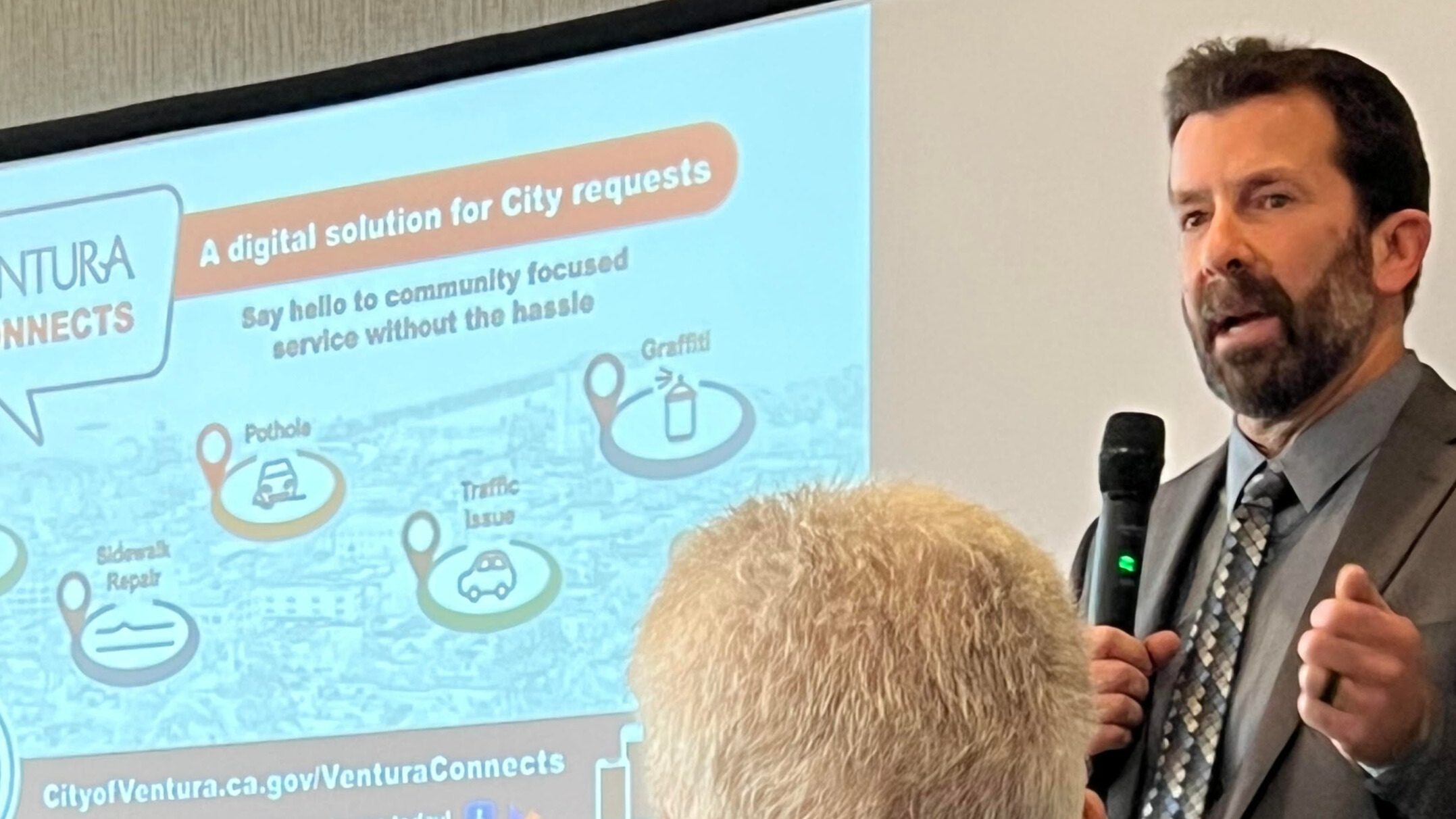
Ayub also reviewed Ventura Connects, a “digital solution designed for city requests and community-focused services, making it hassle-free for residents.” Residents can easily report issues like downed trees, potholes, and graffiti by simply taking a picture and adding the location where it was taken. Created by the City of Ventura, Ventura Connects is a communication and engagement platform. “Its main goal is to enhance interaction between the city government and its residents, allowing them to access information, provide feedback, and engage in local decision-making.”
This platform “helps residents connect with local government by offering easy access to information about city services, events, and projects, and it encourages community involvement. It also helps residents stay informed and engaged with what’s happening in Ventura.” It aims to boost community participation, improve transparency in local government, and foster a sense of community among residents.
To find the most current information and features related to Ventura Connects, visiting the official City of Ventura website or the specific Ventura Connects portal is recommended.
www.cityofventura.ca.gov
