


by Richard Lieberman
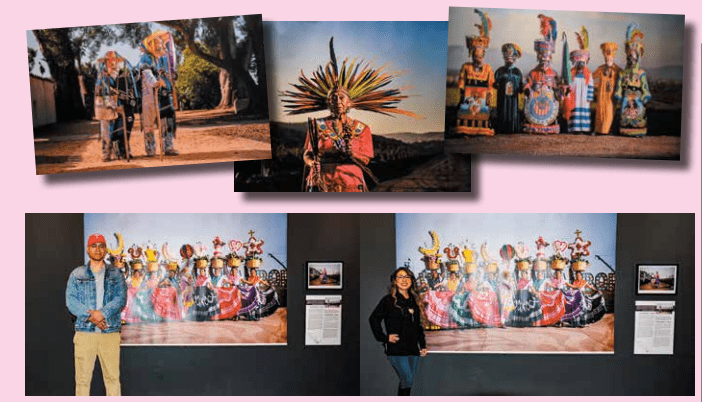
An exhibition called “In focus: Indigenous Diaspora of Ventura County” consists of over forty photographs featuring Mexican Indigenous communities in Ventura County has opened at the Museum of Ventura County. The exhibit highlights the work of Diego Huerta, an internationally known photographer. Huerta for more than eighteen years has been photographing “Pueblos Originarios” (Indigenous communities in Mexico). The exhibit is the first time the artist has photographed Indigenous communities outside of Mexico.
Huerta has made it his life’s work to photograph Indigenous ways of life, “I want to believe that these portraits, the next 100 years, someone, somewhere is going to see these beautiful moments that we try to preserve for eternity,” Huerta said. The exhibit features the rituals of art and stories of Indigenous groups from Southern Mexico now living in Ventura County. The main groups featured in the exhibit include the Mixteco, Zapotec, Purépecha, Maya, Nahua, and the Otomi. Diego displays a view of the cultures and people he encountered in Ventura County, bringing attention to these often-overlooked communities. The exhibition features forty large-format photographs measuring eight feet by four feet.
Carlos Ortega, chief curator for the museum, said it’s Latino Advisory Committee proposed the project over two years ago and it has since been in the works. Ortega said “We found the perfect artist to document local native stories. The idea is to bring to the front the contributions of these communities and step away from the stereotypical view of these groups,” Ortega said. “There are many contributions besides just labor, we wanted to highlight their pride and their cultural richness and that they are an important part of our community.”
Since 2018, some of Huertas projects have been published by National Geographic with two projects. One was an eight-year project “Inside Oaxacan,” displaying how Oaxacan youth are preserving their ancestral traditions, and another project about the Navajo. Several Indigenous dance groups are featured in the exhibition. Included in this group: Danza de Los Quetzales de Gomez Oriente, Danza Flor Bonita, Las Chinas Oaxaquenas – Las Isabeles, Los Chenelos de Morales – Comparsa 805, and Los Escogidos de Asis.
One of the dancers Ana Torres of Las Chinas Oaxaquenas-Las Isabeles when asked about how she got to participate in an Indigenous dance group said “It’s in our blood; it’s in our souls. I am first generation, and my parents migrated to this country when I was about ten years old and just the music, our traditions, and our art we carry that in our souls and in ourselves,” she said.
Diego Huerta started his career early “I liked to draw and paint on the walls so for me as a muralist the inspiration came early.” He said, “I got a camera in my hands when I was very young about twenty years ago and I said I want to do this for the rest of my life and here I am,” he added. Asked about his work made it into National Geographic he said,” I tried so hard to contact National Geographic repeatedly, so many years later they contacted me. The secret is you need to work very hard and to share your work with as many people as you can.
www.venturamuseum.org/exhibits/in-focus-mexican-indigenous-voices-of-ventura-county
